Use Call Now to say where you think rodents are getting in, and an independent provider serving the Fayetteville area will respond.
Common rodent entry points
- Dryer vents, bath fans and chimney flues
- Garage door seals and corners
- Foundation cracks, weep holes and sill plates
- Gaps around pipes, wires, AC line sets and utility penetrations
- Soffits, fascia, roof returns and gable and attic vents
Why order matters
Sealing comes last, once the animals have left. A rodent trapped inside will chew through drywall or wiring to get out, or die in the wall. Final entries are closed only after the provider has monitored for a few days and confirmed that there is no activity.
Maintenance checks
- Replace worn door sweeps and weather stripping
- Keep branches and vines away from the roof
- Check vents and screens each season
- Inspect seals after storms, roof work and landscaping
Materials that stop rodents
| Material | Use | Why |
|---|---|---|
| Concrete or mortar | Foundation holes and cracks | Permanent closure for ground-level gaps. |
| Door sweeps and weather seals | Exterior and garage doors | Seals the gap along the threshold. |
| Steel wool or copper mesh | Small gaps around pipes and wires | Hard to chew and holds sealant in place. |
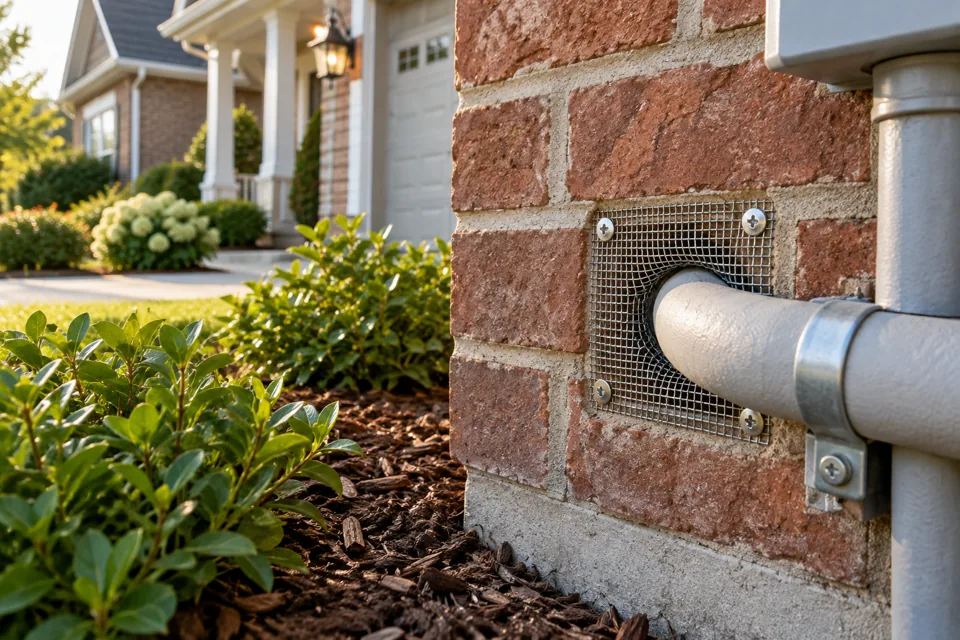
| Hardware cloth (about 1/4 inch) | Vents, weep holes, crawl space openings | Rodents cannot chew through galvanized steel mesh. |
| Sheet metal | Garage door corners, damaged wood edges | Blocks gnawing at edges and corners. |
Questions to ask a rodent control provider
- Which rodent do you think I have and what evidence points to it?
- Is cleanup of droppings and insulation part of the scope or separate?
- Where did they get in, and which entry points will you seal?
- Will you use traps, bait or both, and where will each go?
- How many visits are planned and what happens if activity continues?
How rodent exclusion works from inspection to follow-up
Rodent work is a sequence, and the order matters. Trapping without sealing only replaces the animals you remove. Sealing without trapping can lock a rodent inside the walls. A sound visit does these in order.
- Inspection of the roofline, attic, soffits, vents, foundation, garage, crawl space and utility entries, looking for gnaw marks, rub marks, droppings, nests and runways.
- Identification of the species, because roof rats, Norway rats and house mice travel, nest and take bait differently.
- Trapping or baiting plan: snap traps placed on the travel lines, with tamper-resistant stations outside where rules allow.
- Exclusion: gaps larger than a quarter inch sealed with hardware cloth, steel wool, copper mesh, sheet metal or sealant, and vents and weep holes screened.
- Cleanup and repair recommendations for droppings, contaminated insulation and chewed wiring.
- Follow-up visits to remove traps, check the seals and confirm activity has stopped.
Safety: droppings, nests, pets and children
Rodent droppings, urine and nesting material can carry germs and should be cleaned with care. The CDC and EPA advise ventilating the area, wearing gloves and a respirator rated for the job, wetting droppings with a disinfectant before wiping, and never sweeping or vacuuming them dry.
Keep pets and children out of work areas. Bait is used only in tamper-resistant stations, placed where pets, wildlife and children cannot reach it, and some states restrict certain rodenticides. Exclusion and trapping carry most of the work in those places.
What changes the size of a rodent job
One mouse in a kitchen is a very different job from a colony of roof rats in a two-story attic. Look for a written scope that records what the provider found and explains what each part of the work is meant to achieve.
- Attic and crawl space access, and whether insulation is contaminated
- Number and size of entry points, including roof tiles, vents, rooflines, garage door seals and utility chases
- The species and how long the activity has been going on
- Whether you want inspection and trapping only, or exclusion and cleanup as well
- Whether the home sits next to open space, citrus or palm trees, creeks, farms or older sheds
Common mistakes with rats and mice
- Skipping cleanup. Remaining droppings and urine can draw new rodents.
- Sealing before checking that all animals are out of the structure.
- Using poison alone indoors. Poisoned rodents can die in walls, and bait does not close the entry points.
- Setting a few traps in one place. Rodents follow edges and walls, and traps need to sit on those routes.
- Ignoring the roof and trees. Roof rats use branches, fences and power lines to reach attics.
Prepare your Fayetteville home for rodent work
- Tell the provider about pets, children and any health condition before treatment
- Store pet food and bird seed in sealed metal or hard plastic containers
- Keep trash can lids on and move bins away from the house wall
- Write down where you heard noises, found droppings or saw gnawing, and at what time of day
- Clear access to the attic hatch, garage, crawl space and under-sink cabinets
Rodent cheat sheet
| Rodent | Body and tail | Droppings | Nest and entry |
|---|---|---|---|
| Roof rat | 6 to 8 inches, tail longer than body | 1/2 inch, spindle shaped | Attics and trees, rooflines and vents |
| Norway rat | 7 to 9 inches, tail shorter than body | 3/4 inch, capsule shaped | Burrows at foundations, basements, drains |
| Deer mouse | Slightly larger, white belly, bicolored tail | Similar to house mouse | Sheds, garages and boxes; handle droppings with care |
| House mouse | About 3 inches of body, tail as long as the body | 1/4 inch, rod shaped | Wall voids and insulation, gaps near a quarter inch |
| Pack rat (woodrat) | Larger, furry tail, large ears | Larger, dark, often in piles | Stick middens in garages, sheds, engine bays |
What makes rodent exclusion different in Fayetteville
Fayetteville is a rural-suburban community in Franklin County, Pennsylvania, with farmland, orchards, barns and detached garages close to homes. Harvest, cold weather and open fields push mice toward houses and outbuildings in fall.
Feed, grain and animal housing support rats near barns and sheds. Older brick and frame houses have crawl spaces, porches and sill gaps that rodents use. Ask the provider how these local conditions change where rodents nest, travel and enter at your address.
Rodent exclusion across Fayetteville and nearby cities
In Fayetteville, Pennsylvania, Rodent Control Fayetteville serves ZIP codes: . Providers working in Chambersburg, Greencastle, Waynesboro, Shippensburg and Scotland also receive calls and requests. Because each address is checked on its own, give your ZIP code when you call.
Use Call Now at the top of the page and describe the noises, droppings or damage you found. You will be connected with an independent provider who confirms the address, inspects the roofline and attic and gives you the scope in writing.
Related help in Fayetteville
If this is not quite your situation, these pages cover the neighboring questions: Attic rodent control; Rodent inspection; Mice and rat control; Signs and inspection: rodent control. The service area list shows every nearby city and ZIP code covered.