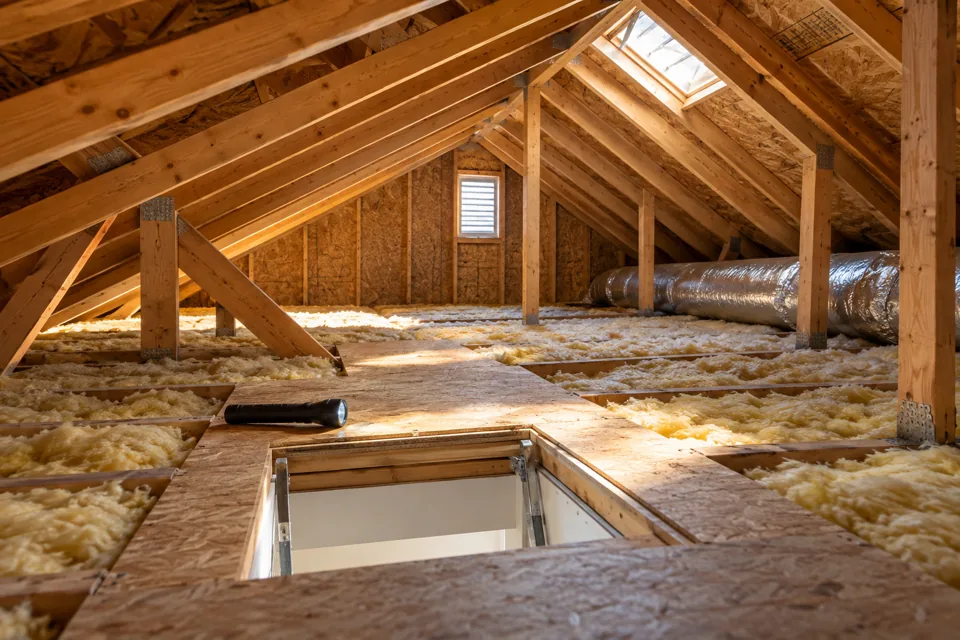
Expect the roofline to be inspected, traps placed up in the attic and each way in closed off. Describe the noises you hear overhead using Call Now, and you will be connected with an independent provider serving the Fayetteville area.
Signs of rodents in the attic
- Greasy rub marks on rafters and entry holes
- Chewed wiring, ducts and stored boxes
- Droppings along beams, in insulation and near vents
- A musty or ammonia-like smell in upper rooms
- Scratching, scampering and thumping at night
After the work
A few weeks on, look in the attic again for new droppings or noise. Cut branches back from the roof, pick up fruit and pet food, and ask for the roofline to be checked after storms.
How attic rodent control works
- Inspect the roofline and attic to find the species and the entry points
- Place snap traps along runways and near entry holes
- Check and reset traps until activity stops
- Seal the entry points with metal mesh, sheet metal and vent screens
- Clean, sanitize and replace contaminated insulation where needed
Safety in the attic
Heat, dust, exposed wiring and nails make attics hard places to work, so providers wear respirators and protective clothing. If you suspect heavy contamination, stay out of the attic, and keep children and pets away from the work area.
How an attic rodent control visit works, step by step
Pest visits that are done properly run in a fixed order, no matter which insect or animal is involved. Keep that order in mind when you talk to different companies, because a visit that leaves out the opening steps is the one to question.
- Inspection: the technician walks the outside first (foundation, vents, utility lines, eaves, fence lines, mulch) and then the inside (kitchen, bathrooms, garage, attic or crawl space).
- Identification: the species is named from the insect, droppings, damage or trail, because the right product and method depend on it.
- Plan: the provider explains what will be done, which products or devices will be used, and what you need to do before and after.
- Treatment or exclusion: the work is done in the places the inspection found, not by spraying every room.
- Follow-up: you get a date for the next check and a clear answer on what to report if activity returns.
Questions to ask before you agree to any attic rodent control
- What will you seal, remove or fix, and what stays my job?
- How many visits are in the plan, and what happens if activity returns?
- Who is on site, and can you show the state licence or applicator ID for the work?
- Which products, baits or devices will you use, and where will they go?
- What species or problem did you find, and what did you see that proves it?
What changes the scope of the work
Neighboring houses rarely need identical attic rodent control work, because age, landscaping and moisture differ from one lot to the next. A good written scope names the factors that shaped the plan for your address and shows how each one widened or narrowed the work.
Two things make proposals easier to compare: a clear line between a single treatment and ongoing service, and a note of anything the technician could not get to. Scopes that name the places you were worried about, such as the attic, crawl space, garage or fence line, beat a generic package every time.
- Number of entry points, gaps around pipes and cracks in the foundation or siding
- How far the problem has spread and how long it has been active
- Whether you want a single treatment or an ongoing plan with scheduled visits
- Size and age of the home, and whether it sits on a slab, a crawl space or a basement
- Access to attics, wall voids, sheds, outbuildings and the yard
Mistakes that make attic rodent control harder
When a treatment fails, the reason is usually one of a short list of common errors, and each of them is simple to avoid once it is pointed out.
- Judging results in a week. Many programs take two to four weeks and a follow-up to settle.
- Spraying store-bought products around bait. Repellent sprays can make insects avoid bait they would otherwise eat.
- Mixing products. Overlapping chemicals can reduce results and add risk.
- Treating only where you see the pest. Activity you see is usually a fraction of what is hidden in walls, voids and soil.
- Skipping the entry points. Without sealing, new pests replace the old ones.
Prepare your Fayetteville home before the visit
A little preparation makes the inspection faster and the treatment more effective. None of it needs to turn the house upside down.
- Write down where you saw activity, what time of day, and when it started. Take clear photos or save a sample in a sealed bag.
- Put away food, pet dishes and children's toys from the rooms being treated.
- Fix a dripping tap or wet spot you know about. Moisture feeds most household pests.
- Clear a path to the garage, water heater, under-sink cabinets, attic hatch and crawl space door.
- Tell the provider about pets, fish tanks, asthma, pregnancy or any health concern in the home so the plan fits.
What makes attic rodent control different in Fayetteville
Fayetteville is a rural-suburban community in Franklin County, Pennsylvania, with farmland, orchards, barns and detached garages close to homes. Harvest, cold weather and open fields push mice toward houses and outbuildings in fall.
Feed, grain and animal housing support rats near barns and sheds. Older brick and frame houses have crawl spaces, porches and sill gaps that rodents use. Ask any provider how these local details change the plan for your address, because a method that works in one climate or housing style can fail in another.
Attic rodent control across Fayetteville and nearby cities
Rodent Control Fayetteville covers Fayetteville, Pennsylvania and the surrounding area. Calls and requests also reach providers serving Chambersburg, Greencastle, Waynesboro, Shippensburg and Scotland. Coverage is confirmed address by address, so say your ZIP code when you call.
Start by using Call Now at the top of the page and explaining what you have noticed. You will reach an independent provider in your area, who confirms the address, inspects the property and puts the scope in writing for you.
Related help in Fayetteville
If this is not quite your situation, these pages cover the neighboring questions: Rodent exclusion; Rodent inspection; Mice and rat control; Comparing rodent control quotes. The service area list shows every nearby city and ZIP code covered.